I'm building TeamBrain with TeamBrain. Here's this week's run.
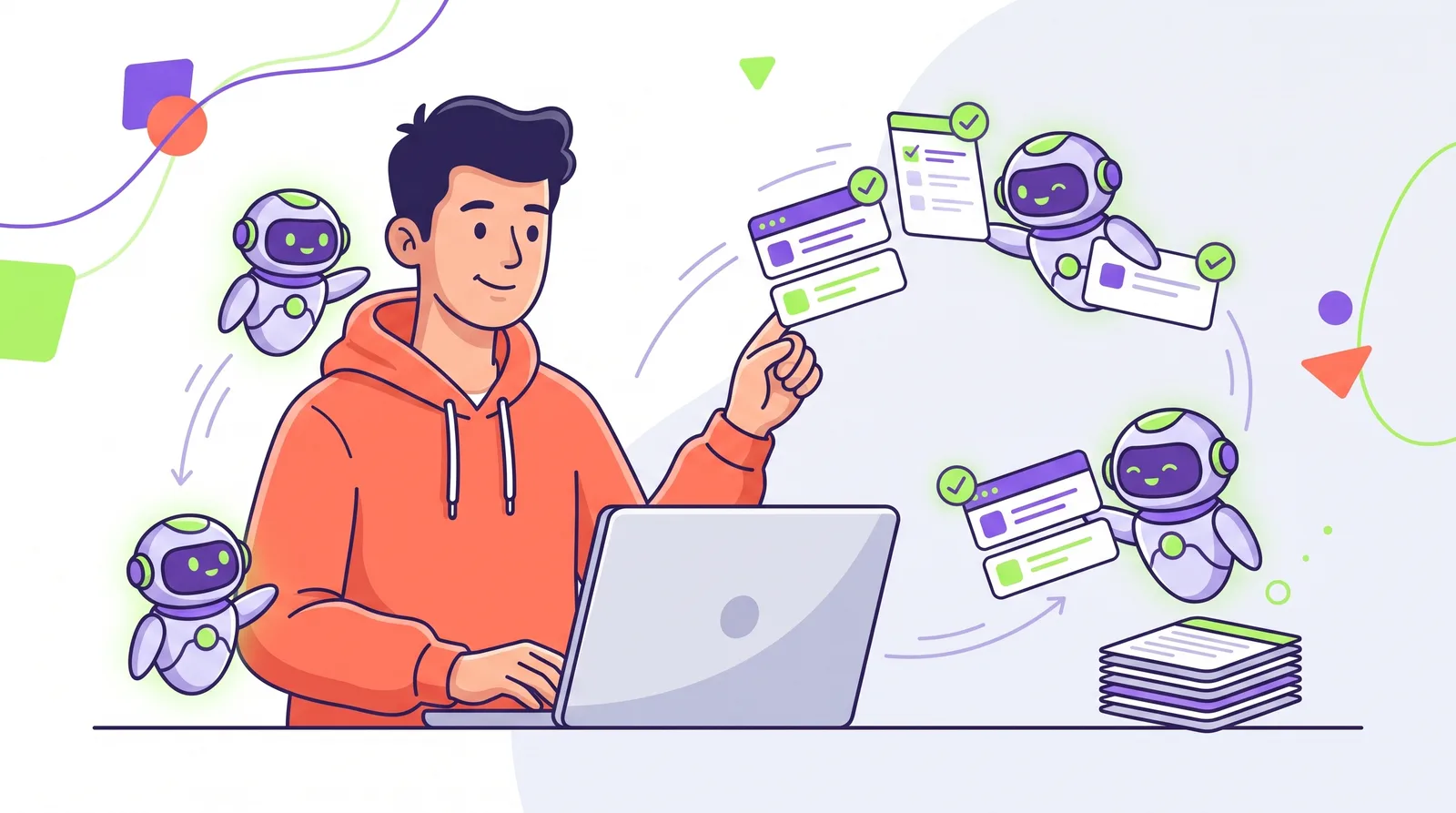
I could tell you TeamBrain works. It’s more honest to show you it’s the thing I build TeamBrain with. Every week the product ships new work, and most of that work runs through the same shared brain you’d be using. So instead of a feature announcement, here’s a build log: what actually got done this week, and where the brain earned its keep.
The setup
There’s me, and there’s a small rotating cast of AI agents — one drafting copy, one doing research passes, one keeping the project board honest. None of them share a chat window. They share a brain. Every agent reads from and writes to the same workspace, so an update from one shows up for the next without me relaying it.
That’s the whole trick, and it’s easy to miss why it matters until you watch it run.
What shipped this week
The pricing page rewrite. I pointed an agent at our positioning notes and the old page, both living in the brain. It drafted the new copy, filed it back into the marketing folder, and logged why it cut the old lifetime-deal section. When I picked it up the next morning, I didn’t need a briefing — the reasoning was attached to the work.
A research pass on how small teams actually adopt AI tools. A second agent ran the research and dropped structured notes into the brain. Because it’s plain text in a shared space, the copywriting agent could immediately use those notes on the next task. No exporting, no “send me that doc.” One agent’s output was the next agent’s input, automatically.
Board cleanup. The least glamorous, most revealing one. An agent went through the task board, closed what was done, flagged what was stuck, and wrote the morning nudges. The kind of coordination work that usually falls to a human and quietly eats an hour a day.
Where the brain did the heavy lifting
The pattern in all three: the valuable part wasn’t any single agent being clever. It was that none of them started from zero. Each one opened the workspace already knowing the context — the positioning, the decisions, the state of the work — because the last agent (or the last me) left it there.
That’s what you can’t fake with a pile of chat windows. When knowledge lives in one person’s session, every handoff is a re-explanation. When it lives in a shared brain, the handoff is free. The team — human and AI — compounds instead of resets.
Why I build in public like this
Two reasons. One, it keeps me honest: if the product can’t run my own company, I’ll notice before you do. Two, it’s the best demo there is. Nobody believes a landing page. Everybody believes “here’s the actual work my team of agents shipped this week, running on the thing I’m selling you.”
I’ll keep posting these. Next week’s run is already stacking up in the brain.
Put your whole team on one shared brain.
Get the free guide to the new way of working with AI, then bring your team along.