
Why does ChatGPT forget my company context?
You tell ChatGPT about your business. What you sell, who your customers are, how you like things written. It gets it, and the answers are good for the rest of the day.
The next morning you open a new chat and it has no idea who you are. So you type it all out again. Claude does the same thing. So does the version your coworker uses, even though they set it up carefully too.
This is just how these tools work right now, and once you know why, the fix is easy to see.
Why ChatGPT forgets: every new chat starts empty
A chat is a blank page. The AI reads what’s in that one conversation and answers from it. Start a new chat and the page is blank again. Nothing you said before carries over.
That’s on purpose: if every message carried along everything you’d ever typed, chats would get slow and cost more to run, and old stuff would leak into work where it doesn’t belong. So the tool wipes the page each time.
The problem is that your business doesn’t start over every morning. How you write is the same today as it was yesterday. How you handle a refund doesn’t change because you opened a new tab. But the tool starts from nothing each time, so you keep teaching it the same things again.
Doesn’t AI have memory now?
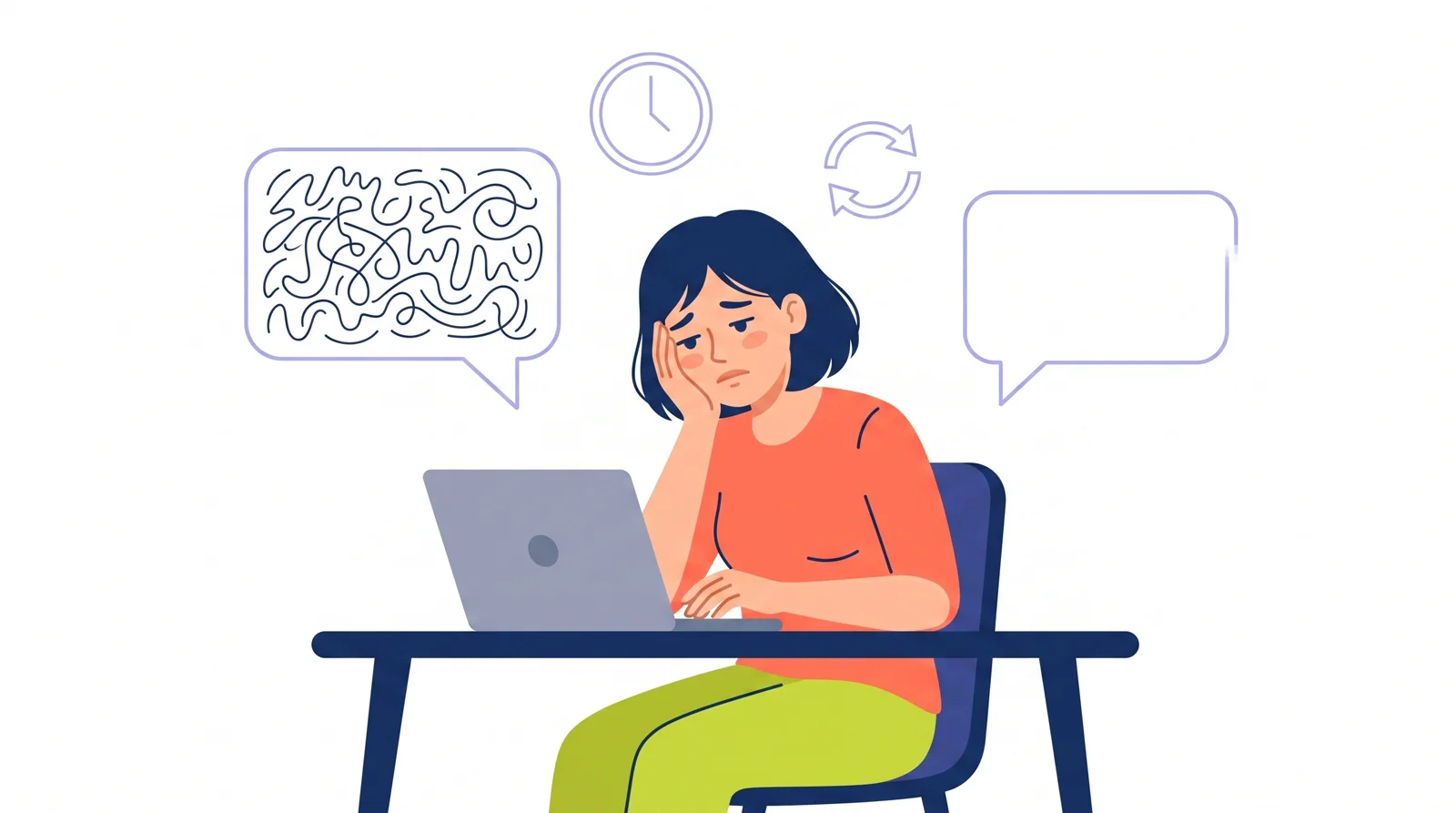
Sort of, which is where people get confused. As of 2026, ChatGPT and Claude both have memory features. ChatGPT can hang on to things across your chats. Claude can look back at your past conversations. They’re real and they help.
Here’s what they don’t do: they remember for you, on your account. That’s personal memory. It learns your habits from your own chats. It is not a shared record of how your company works that the rest of your team can use.
Say you spend an afternoon teaching ChatGPT your writing style. That stays in your account. Your operations manager logs into ChatGPT and gets none of it. She starts over and teaches it her version, which is close to yours but not the same. Now there are two “company styles,” each stuck in one person’s private chats.
Personal memory fixes a headache for one person, but it doesn’t touch the real problem, which is that a business is a group of people who need to work from the same information.
One more thing. These features change fast. Anthropic and OpenAI keep updating memory and Projects, so whatever the limits are the week you read this, expect them to move. That’s another reason not to pin your company’s knowledge to one vendor’s personal-memory setting.
Chat history is not the same as team knowledge
This is the part that trips people up most, so it’s worth going slow.
You have a good back-and-forth with ChatGPT and it finally understands your customer. That understanding now sits in one place: that chat, in your account. It feels like you saved something. You did, but you saved it somewhere nobody else can get to and you probably can’t find again in three weeks.
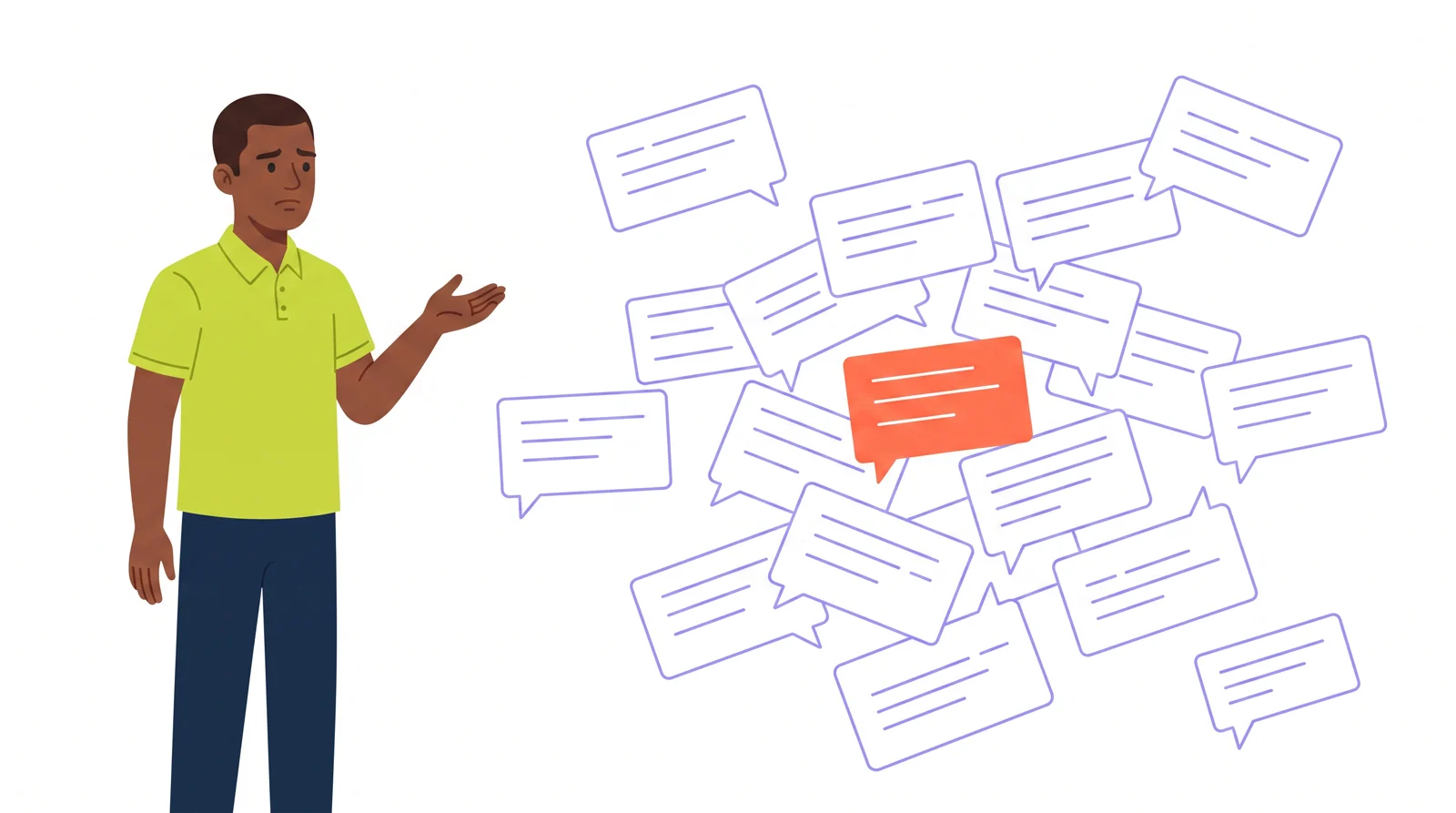
Real team knowledge works differently from a chat log in a few ways. Everyone who needs it can see the same copy, instead of it being locked to one login. You can find it, instead of scrolling back through hundreds of old chats. And there’s one right answer to “how do we write a subject line,” instead of a different answer in each person’s chats.
A chat history is a record of a conversation you had, not a place your company keeps what it knows. Using it as your company’s memory is like using your sent folder as your filing system. The information is in there somewhere, but good luck finding it when you need it.
Why the forgetting gets worse with a team
On your own it’s annoying but you cope. You keep a doc somewhere and paste it in at the start of each chat.
Add people and it piles up. Five people each run their own AI, each with their own pasted-in context, and each copy drifts a little. One person’s ChatGPT thinks you use exclamation points. Another’s thinks you never do. A new hire has nothing at all, and doesn’t even know whose version is the right one.
So you don’t end up with a smarter team. You end up with five people using AI slightly differently, all under one roof, each a bit faster on their own while the team gets a bit less consistent. That’s why “just paste it in each time” stops working the moment there’s more than one of you. There’s no shared place for the context to live.
The fix: give your AI one shared place to read from
Once the problem is clear, the fix is straightforward. The context is scattered across private chats that get wiped, so you put it in one shared place and use an AI that reads from that place every time instead of asking you to explain it again.
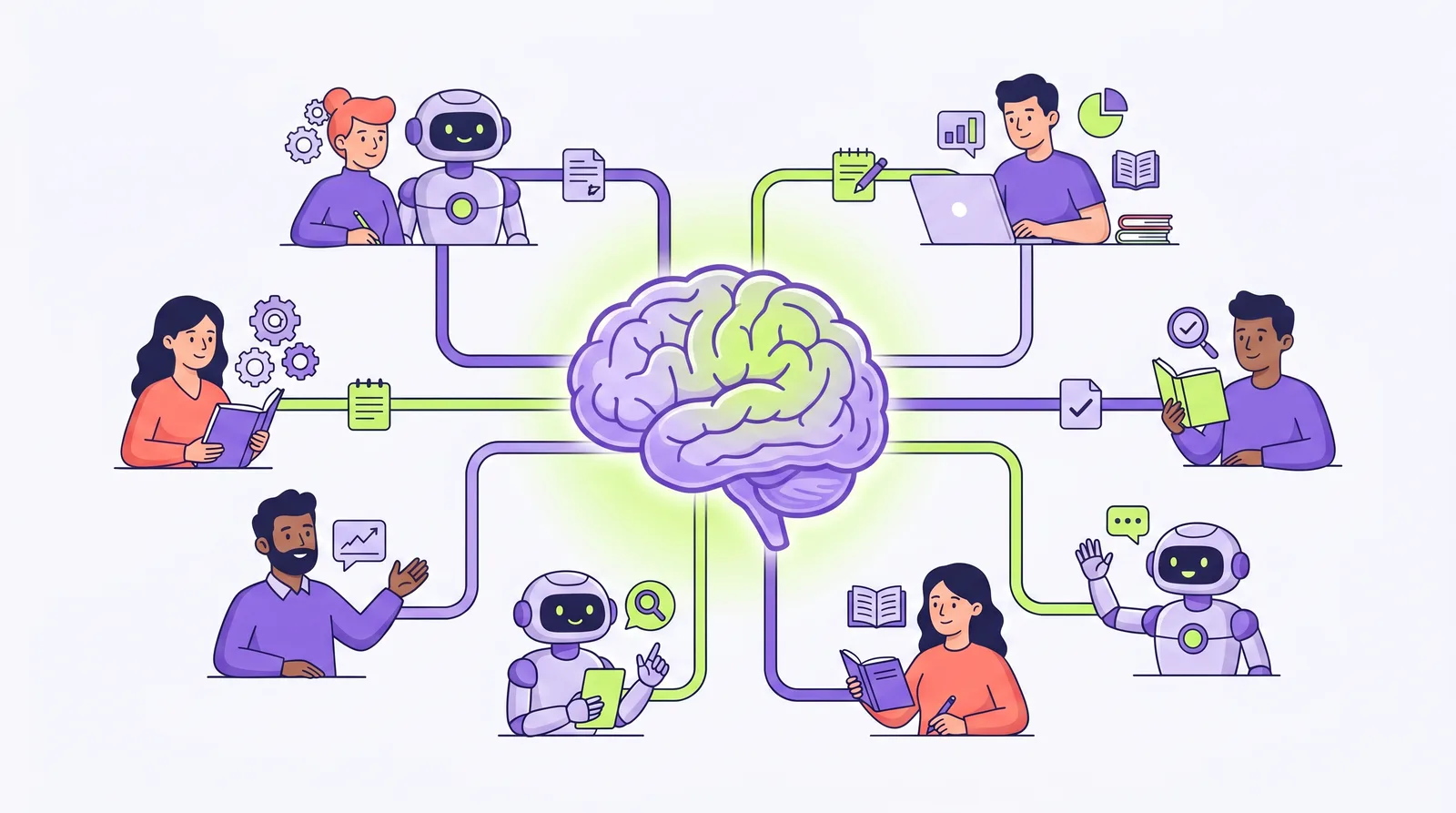
Think of it as one brain your team writes to and every AI reads from. How you talk to customers goes in once. Your product details go in once. How you handle the awkward situations goes in once. Then whenever anyone on the team tells their AI to do something, it reads that shared context first. Nobody has to re-explain and nobody drifts, and a new hire’s AI starts out already knowing how the company works.
The context stops living in each person’s head and each person’s chat history. It becomes something the company keeps in one spot that the tools connect to.
This is a real kind of tool now. You keep using Claude or ChatGPT. You just point them at a shared brain instead of retyping your business into every chat.
That’s what TeamBrain is. You put your company’s context in one workspace, connect your AI to it, and every chat starts with what your team already knows. Same tools you use today. They stop forgetting because they’re reading from a place that keeps it.
Where to start
If you want to set this up, we wrote the step-by-step versions:
- How to give your team a shared brain with Claude and ChatGPT is the no-code setup.
- Share a Claude Project without a Teams plan is the workaround when Project sharing is locked behind a paid team plan.
- What tasks should I delegate to AI first is the next step once the context is in place.
The takeaway is small but it changes how you use these tools. The AI isn’t broken and you’re not using it wrong. It just has nowhere to store what your company knows. Give it one place to read from and the forgetting stops.
Put your whole team on one shared brain.
Get the free guide to the new way of working with AI, then bring your team along.